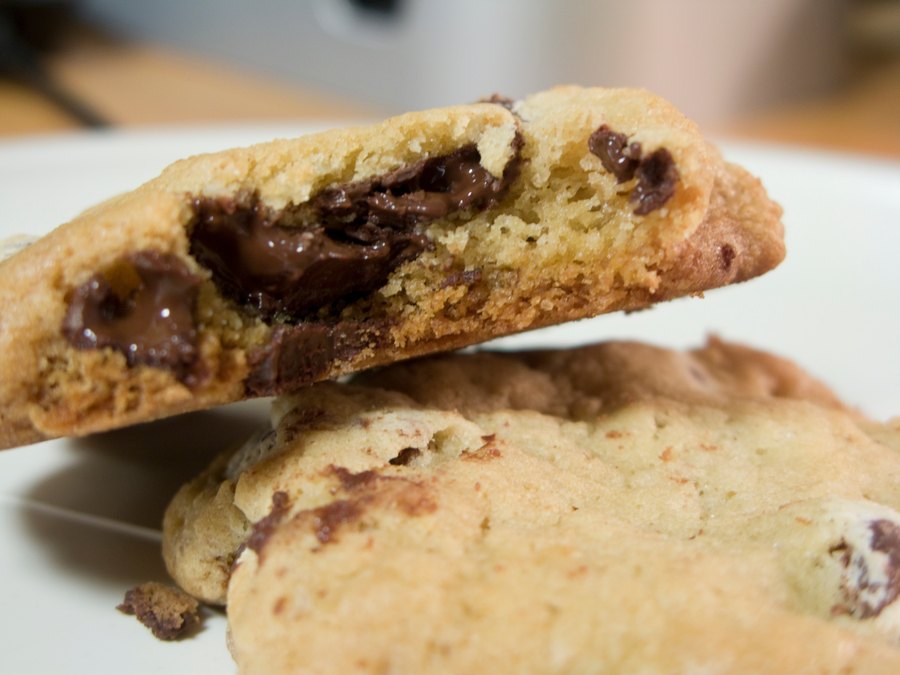
More brown sugar means more water stays in the crumb
Invert sugar in molasses binds water and holds it in the crumb after baking. Retained water is what chew is.
That single property is behind the fitted effect on this axis: recipes with a higher share of brown sugar come out chewier. Worth being direct about that edge result: it runs crisper, not softer, so it is not the tidy "everything gets softer" story a page like this wants to tell. What we can say is narrower and still real. A more tender bite and retained water are close to the same physical fact, and retained water is also the raw material a cookie is made of before it starts drying out over the following days. We did not measure that later part directly, no cook in these reviews baked the same recipe twice and timed how long it stayed soft. The bite result is the closest fitted stand-in we have for it, which is why the recipe built for chew is the one we would point to first if staying soft matters more to you than the edge.
What to do: if a recipe keeps going hard on you overnight, brown sugar share is the formula lever most tied to retained moisture. Check it before you touch the storage container. Full breakdown of the ratio here.